Proudly Serving Onslow County & Coastal North Carolina
Schedule Service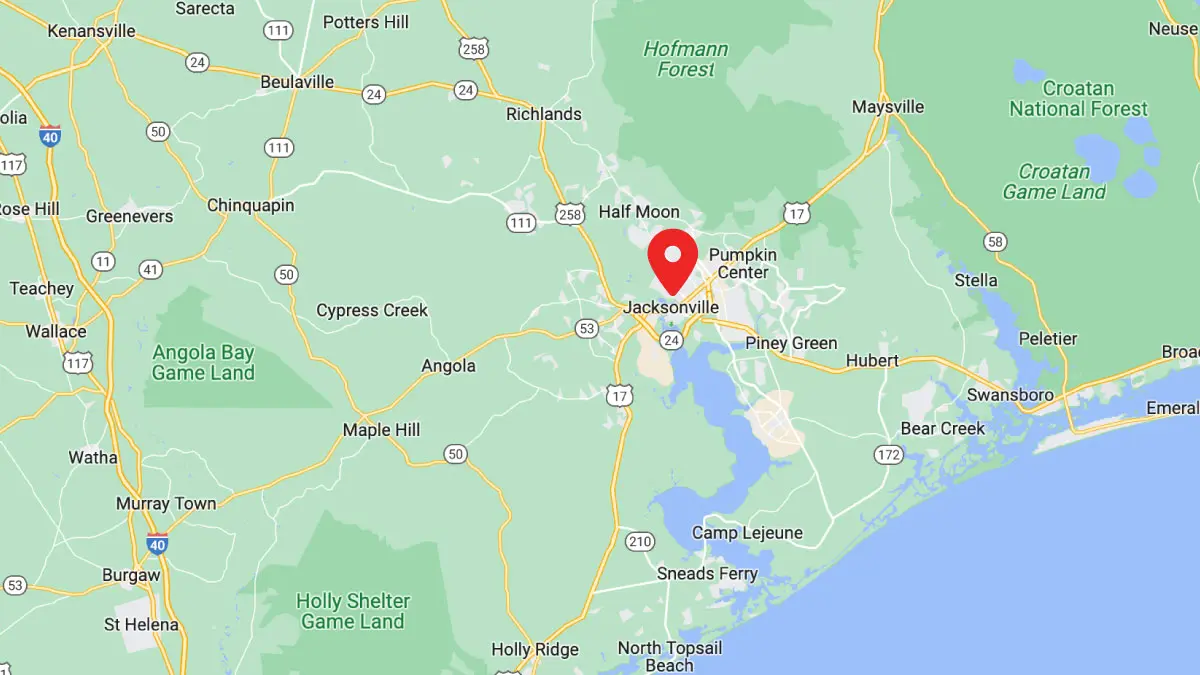
Published September 11, 2026 - Kennedy's Heating & Air Conditioning - Richlands, NC
About one in ten homes in Onslow County is a mobile home, according to the Census Bureau's 2024 American Community Survey, which counts more than 9,000 of them. Most were built after the federal HUD construction code took effect, and their heating questions are different from a site-built house: the equipment has to be listed for manufactured housing, the ducts run under the floor, and a double-wide has a crossover duct that nobody sees until it fails. Most of the advice online is national. This guide is for a home in Richlands, Jacksonville, Sneads Ferry or Hubert, where the winters are short, the summers are wet and the salt air reaches well inland.
Manufactured homes are built to a federal standard, the HUD code, rather than to the state residential code that governs a site-built house. That code requires heat-producing appliances to be listed or certified by a nationally recognized testing agency and installed to the home's design, which is why furnaces and air handlers sold for these homes carry a label stating they are approved for manufactured housing. The practical differences: the indoor unit is usually a downflow model that pushes air into a duct trunk under the floor, the supply registers are in the floor, and return air comes back through a grille on the equipment closet door rather than through a ducted return. A double-wide has two floor trunks joined by a flexible crossover duct under the marriage line, and the whole duct system sits in the underbelly above the vapor barrier. Equipment chosen for a site-built house will often not fit the closet, the airflow or the listing, and an inspector will notice.
A packaged unit puts the whole system, the compressor, both coils, the blower and the heating section, in one cabinet that sits on a pad beside the home and connects to the underbelly duct through a short insulated plenum. It is the most common retrofit for a mobile home because the home does not need an indoor equipment closet, the installation is a crane-free ground set, and the unit can be replaced in a day. Packaged units come as a straight electric unit with strip heat, a packaged heat pump, or a gas package unit that heats with a burner and cools with a compressor. A gas package unit can be built to run on natural gas from Piedmont's mains in Jacksonville or on propane for a rural lot, and the two are not interchangeable without a conversion done to the listing. If yours is failing rather than aging, start with our gas package unit repair and service page.
A split heat pump uses a downflow air handler in the home's equipment closet and a condenser outside, connected by refrigerant lines. It fits when the home was built with a closet and a floor duct connection for indoor equipment, when there is clearance to service the air handler, and when the homeowner wants a higher efficiency rating than most packaged units offer. Kennedy's installs Daikin equipment as the region's only Daikin Comfort Pro dealer, including variable-speed condensers that run quietly in a small yard. Salt exposure decides the outdoor placement in Sneads Ferry, Surf City and North Topsail Beach: the condenser should sit on the side of the home away from the prevailing wind off the water, and the coil should be rinsed each spring. See heat pump installation and replacement for the equipment side.
Winters here are mild enough that a heat pump does most of its heating in its efficient mode, moving heat from outdoor air rather than making it with a strip. That favors a heat pump, packaged or split, over straight electric heat. Two things surprise first-winter owners. On a January morning in the 20s the thermostat calls for auxiliary heat, and the electric strip inside the unit comes on; it heats the home, and it also shows up on the Jones-Onslow EMC or Duke Energy Progress bill, because resistance heat draws several times the power of the compressor. And on a cold damp morning the outdoor coil frosts, the unit runs a defrost cycle, and steam rises off it while cool air comes through the registers for a few minutes. Both are normal. What is not normal is the strip running all the time, which usually means the heat pump side has a problem, or the unit never leaving defrost. In relative terms, a heat pump in good repair costs less to run than strip heat, and a split system at a higher rating costs less than a packaged unit at a lower one.
It is a furnace or air handler that carries a listing for use in manufactured homes, meaning a testing agency has certified it for the clearances, airflow and combustion arrangement those homes require. Before buying a used unit or a unit from a big-box shelf, check the data plate on the cabinet for the words "manufactured home" or "mobile home" in the listing, check that the airflow direction matches the closet (almost always downflow), and check that the fuel type matches the home. A unit without that listing will fail inspection even if it fits the closet.
The duct system is where mobile home heating bills are won or lost. The HUD code requires the crossover duct on a multi-section home to be supported, mechanically fastened, sealed and insulated, with no part of it touching the ground, and requires supply ducts to be insulated to at least R-4. Over the years the crossover sags, the tape fails, and the duct dumps conditioned air into the crawl space. Floor ducts get crushed by foot traffic and by pest control crews. After a coastal storm the belly insulation gets wet, sags away from the floor, and stays wet for months in our humidity, which is the same moisture problem that drives crawl space encapsulation on site-built homes. A replacement visit that skips the underbelly leaves the new unit heating the ground. Our ductwork fabrication and installation team seals or replaces the crossover and repairs the belly wrap as part of a changeout.
Replacing a packaged unit or a split system is a mechanical change-out and it is permitted work. Onslow County's guide for homeowners states that permits and inspections are required on most heating and air conditioning work, and its manufactured home permit lists the site-installed mechanical work among the items inspected. Central Permitting is at the Onslow County Government Center and can be reached at 910-455-3661. Inside the Jacksonville city limits, the City of Jacksonville Building Inspections Division regulates mechanical, gas and electrical systems from City Hall at 815 New Bridge Street, 910-938-5232. Kennedy's pulls the permit and schedules the inspection as part of the job; a quote that does not include a permit is a quote to compare carefully.
We start with a load calculation on the home, not the tonnage on the old data plate, because many mobile homes were sold with oversized equipment that short-cycles and never dries the air. We inspect the crossover and floor ducts, the return path and the belly wrap, and we tell you what needs sealing before the new unit goes in. For a packaged unit we check the pad, the tie-down and the plenum; for a split system we check the closet clearance and the condenser location for salt exposure. The old unit and its refrigerant are recovered and disposed of properly. Same-day service is available for repairs across the county. See our mobile and modular home HVAC services in Jacksonville, and consider a Champion maintenance plan so the crossover gets looked at every year instead of after it fails.
Sometimes, but not automatically. The outdoor condenser of a split heat pump is the same equipment used on a site-built house. The indoor side is the constraint: a manufactured home built to the HUD code needs a downflow air handler or furnace that is listed for manufactured housing, sized for the home's duct system, and installed in the closet the home was built with. If the home has an existing packaged unit outside and no indoor equipment closet, a packaged heat pump is usually the cleaner fit. A load calculation and a look at the ductwork decide it.
At the same efficiency rating, a split heat pump usually costs less to run than a packaged unit because the indoor coil and blower sit inside the conditioned space instead of in an outdoor cabinet, and split systems are available at higher SEER2 and HSPF2 ratings. The gap is smaller than the gap caused by leaking crossover ducts or a collapsed underbelly, so fix the ductwork first. We give the comparison in relative terms because your bill depends on the home, the rate you pay and how the thermostat is set.
Three common reasons. The unit is in defrost, which reverses the system for a few minutes and can send cool air through the registers while steam rises off the outdoor coil; this is normal. The auxiliary electric heat strip has failed or its breaker has tripped, so the heat pump alone cannot keep up on a cold morning. Or the refrigerant charge is low from a leak, which needs a technician with EPA Section 608 certification. If the air is cool for more than a few minutes at a time, call for service.
Yes. Onslow County's own guide for homeowners says permits and inspections are required on most heating and air conditioning work, and Central Permitting can be reached at 910-455-3661. For a manufactured home the site-installed mechanical work is one of the items the county inspects. Inside the Jacksonville city limits, the City of Jacksonville Building Inspections Division at 815 New Bridge Street regulates mechanical systems and can be reached at 910-938-5232. Kennedy's pulls the permit as part of the job.
Yes. Kennedy's installs, repairs and maintains heating and cooling equipment in mobile and modular homes across Onslow County, including Sneads Ferry, Hubert, Richlands, Jacksonville, Holly Ridge, Swansboro and the beach communities. Same-day service is available. Call (910) 340-7061 or book online.
See mobile and modular home heating services, mobile and modular home AC services, gas package unit repair and financing, or call (910) 340-7061.
Kennedy's Heating & Air proudly serves Richlands, Jacksonville, Camp Lejeune, and coastal North Carolina with comprehensive heating, cooling, and home comfort solutions
Expert AC installation, repair, and maintenance services for Jacksonville homes. Stay cool with energy-efficient Daikin and Ducane air conditioning systems designed for coastal North Carolina.
Learn MoreProfessional furnace installation and heating repair for Jacksonville winters. High-efficiency gas furnace systems with expert load calculations, permits, and certified installation.
Learn MoreHeat pump repair, replacement and twice-a-year tune-ups for Jacksonville homes, including defrost, emergency heat and salt-air coil problems. Ducted and Daikin ductless systems.
Learn MoreSpecialized HVAC services for mobile homes, manufactured homes, and modular homes in Jacksonville. Expert ductwork, heating, cooling, and air quality solutions for manufactured housing.
Learn MoreProfessional commercial HVAC installation, repair, and maintenance for Jacksonville businesses. Rooftop units, split systems, and building automation for offices, restaurants, and retail spaces.
Learn MoreIndoor air quality solutions, crawl space encapsulation, and duct cleaning, sealing & repair in Jacksonville. Breathe easier with cleaner, healthier air.
Family-owned company serving Jacksonville, Camp Lejeune, and coastal North Carolina. Call today for expert HVAC service.
(910) 340-7061 Schedule OnlinePrimary Service Areas: Jacksonville, Camp Lejeune, Sneads Ferry, Surf City, North Topsail Beach, Topsail Beach, Holly Ridge, Richlands, Swansboro, Emerald Isle, Hubert, and throughout Onslow County and coastal North Carolina.
Family-Owned Business
Licensed & Insured

©Red Barn Media Group 2026